Robert Hass Ranked
Selected Poems from the Poet's Poetry Collections Worst to Best

In yesterday’s episode of the Some Brothers Podcast, Ryan and I both shared our ranked list of Robert Hass’ poetry collections.
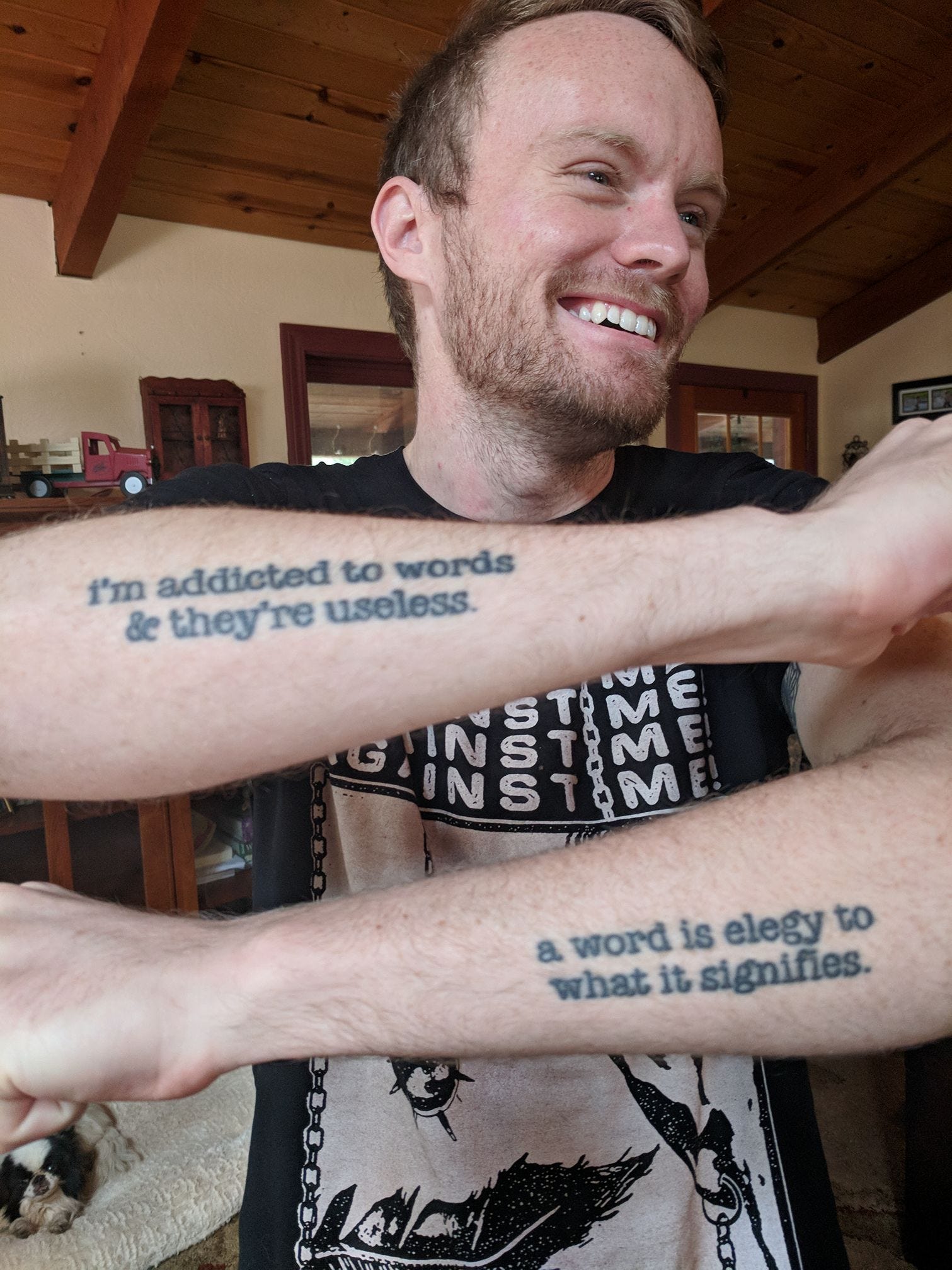
Back in 2021, I cited Hass in my poetry collection a word is not what it means.
To offer a bit more to my deep readers here, below you will find one poem I have selected from each of Hass’ collections.
6.) Time & Materials (2007)
The Problem of Describing Color
If I said—remembering in summer,
The cardinal’s sudden smudge of red
In the bare gray winter woods—
If I said, red ribbon on the cocked straw hat
Of the girl with pooched-out lips
Dangling a wiry lapdog
In the painting by Renoir—
If I said fire, if I said blood welling from a cut—
Or flecks of poppy in the tar-grass scented summer air
On a wind-struck hillside outside Fano—
If I said, her one red earring tugging at her silky lobe,
If she tells fortunes with a deck of fallen leaves
Until it comes out right—
Rouged nipple, mouth—
(How could you not love a woman
Who cheats at the Tarot?)
Red, I said. Sudden, red.
5.) Human Wishes (1989)
![Human Wishes [Book]](https://substackcdn.com/image/fetch/$s_!eKBZ!,f_auto,q_auto:good,fl_progressive:steep/https%3A%2F%2Fsubstack-post-media.s3.amazonaws.com%2Fpublic%2Fimages%2Fb1992592-f2c2-45b5-9399-21e415f921f6_800x1200.jpeg "Human Wishes [Book]")
The last two lines of this one are fantastic—amongst his most memorable lines. Don’t skip to the end though! You gotta read the whole thing up to that point to get the full effect.
Natural Theology
White daisies against the burnt orange of the windowframe,
lusterless redwood in the nickel gray of winter,
in the distance turbulence of water—the green regions
of the morning reflect whatever can be gained, normally,
by light, then give way to the blue regions of the afternoon
which do not reflect so much as they remember,
as if the light, one will all morning, yielded to a doubleness
in the pitch-dark forenoon of a dreary day, or a stone bridge
in a small town, a cool café, tables with a violinback sheen,
ferns like private places of the body distanced and made cool—
images not quite left behind rising as an undertow
of endless transformation against the blurring world
outside the window where, after the morning clarities,
the faint reflection of a face appears; among the images
a road, repetitively, with meadow rue and yarrow
whitening its edges, and pines shadowing the cranberry brush,
and the fluting of one bird where the road curves and disappears,
becoming that gap or lack which is the oldest imagination
of need, defined more sharply by the silver-gray region
just before the sun goes down and the clouds fade
through rose to bruise to the city-pigeon color of a sky
going dark and the wind comes up in a brushstroke silhouettes
of trees and to your surprise the window mirrors back to you
a face open, curious, and tender; as dance is defined
by the body’s possibilities arranged, this dance
belongs to the composures and the running down of things
in the used sugars of five-thirty: a woman straightening
a desk turns her calendar to another day, signaling
that it is another day where the desk is concerned
and that there is in her days what doesn’t belong to the desk;
a kid turns on TV, flops on the couch to the tinny sound
of little cartoon parents quarreling; a man in a bar
orders a drink, watches ice bob in the blond fluid,
he sighs and looks around; sad at the corners, nagged by wind,
others with packages; others dreaming, picking their noses
dreamily while they listen to the radio describe configurations
of the traffic they are stuck in as the last light
like held breath flickers among mudhens on the bay,
the black bodies elapsing as the dark comes on, and the face
in the window seems harder and more clear. The religion
or the region of the dark makes soup and lights a fire,
plays backgammon with children on the teeth or the stilettos
of the board, reads books, does dishes, listens
to the wind, listens to the stars imagined to be singing
invisibly, goes out to be regarded by the moon, walks
dogs, feeds cats, makes love in postures so various,
with such varying attention and intensity and hope,
it enacts the dispersion of tongues among the people
of the earth—compris? versteh?—and sleeps with sticky genitals
the erasures and the peace of sleep; exactly the half-moon
holds, and the city twinkles in particular windows, throbs
in its accumulated glow which is also and more blindingly
the imagination of need from which the sun keeps rising into morning light,
because desires do not split themselves up, there is one desire
touching the many things, and it is continuous.
4.) Sun Under Wood (1996)

Faint Music
Maybe you need to write a poem about grace.
When everything broken is broken,
and everything dead is dead,
and the hero has looked into the mirror with complete contempt,
and the heroine has studied her face and its defects
remorselessly, and the pain they thought might,
as a token of their earnestness, release them from themselves
has lost its novelty and not released them,
and they have begun to think, kindly and distantly,
watching the others go about their days—
likes and dislikes, reasons, habits, fears—
that self-love is the one weedy stalk
of every human blossoming, and understood,
therefore, why they had been, all their lives,
in such a fury to defend it, and that no one—
except some almost inconceivable saint in his pool
of poverty and silence—can escape this violent, automatic
life’s companion ever, maybe then, ordinary light,
faint music under things, a hovering like grace appears.
As in the story a friend told once about the time
he tried to kill himself. His girl had left him.
Bees in the heart, then scorpions, maggots, and then ash.
He climbed onto the jumping girder of the bridge,
the bay side, a blue, lucid afternoon.
And in the salt air he thought about the word “seafood,”
that there was something faintly ridiculous about it.
No one said “landfood.” He thought it was degrading to the rainbow perch
he’d reeled in gleaming from the cliffs, the black rockbass,
scales like polished carbon, in beds of kelp
along the coast—and he realized that the reason for the word
was crabs, or mussels, clams. Otherwise
the restaurants could just put “fish” up on their signs,
and when he woke—he’d slept for hours, curled up
on the girder like a child—the sun was going down
and he felt a little better, and afraid. He put on the jacket
he’d used for a pillow, climbed over the railing
carefully, and drove home to an empty house.
There was a pair of her lemon yellow panties
hanging on a doorknob. He studied them. Much-washed.
A faint russet in the crotch that made him sick
with rage and grief. He knew more or less
where she was. A flat somewhere on Russian Hill.
They’d have just finished making love. She’d have tears
in her eyes and touch his jawbone gratefully. “God,”
she’d say, “you are so good for me.” Winking lights,
a foggy view downhill toward the harbor and the bay.
“You’re sad,” he’d say. “Yes.” “Thinking about Nick?”
“Yes,” she’d say and cry. “I tried so hard,” sobbing now,
“I really tried so hard.” And then he’d hold her for a while—
Guatemalan weavings from his fieldwork on the wall—
and then they’d fuck again, and she would cry some more,
and go to sleep.
And he, he would play that scene
once only, once and a half, and tell himself
that he was going to carry it for a very long time
and that there was nothing he could do
but carry it. He went out onto the porch, and listened
to the forest in the summer dark, madrone bark
cracking and curling as the cold came up.
It’s not the story though, not the friend
leaning toward you, saying “And then I realized—,”
which is the part of stories one never quite believes.
I had the idea that the world’s so full of pain
it must sometimes make a kind of singing.
And that the sequence helps, as much as order helps—
First an ego, and then pain, and then the singing.
3.) Field Guide (1973)
Warning: The formatting gets a little messed up on this one. Substack hates haiku. You’ll get the idea. For best results on all of these poems I’m sharing here, check out the full book and read them in context.
After the Gentle Poet Kobayashi Issa
New Year’s morning—
everything is in blossom!
I feel about average.
A huge frog and I
staring at each other,
neither of us moves.
This moth saw brightness
in a woman’s chamber—
burned to a crisp.
Asked how old he was
the boy in the new kimono
stretched out all five fingers.
Blossoms at night,
like people
moved by music
Napped half the day;
no one
punished me!
Fiftieth birthday:
From now on,
It’s all clear profit,
every sky.
Don’t worry, spiders,
I keep house
casually.
These sea slugs,
they just don’t seem
Japanese.
Hell:
Bright autumn moon;
pond snails crying
in the saucepan.
As a bonus, here is an Issa haiku translated by Robert Hass, so you get the idea:
All the time I pray to Buddha
I keep on
killing mosquitoes.
I always reflect on my Buddhist ethics when I kill an insect. I try to avoid it.
2.) Summer Snow (2020)
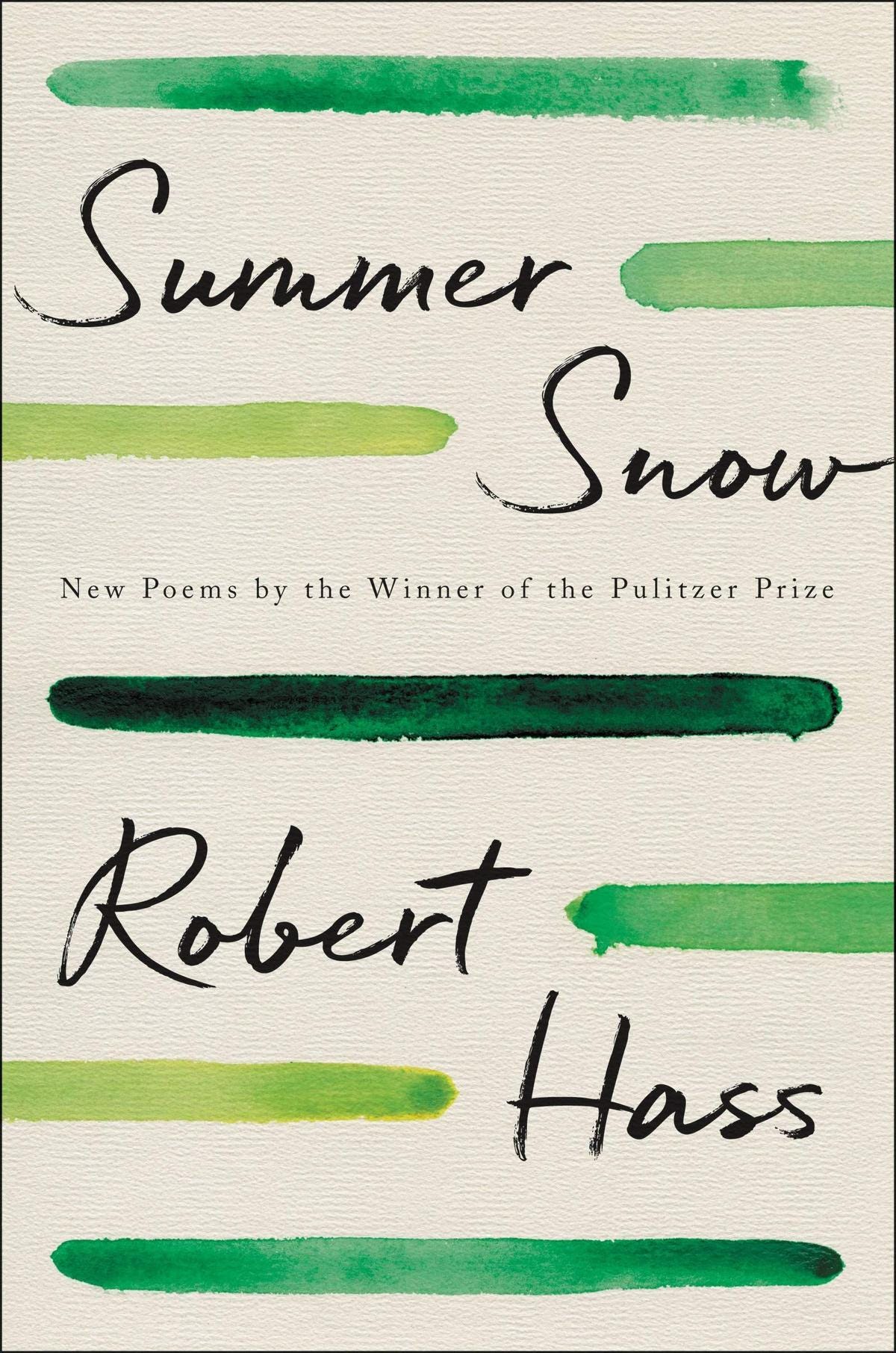
This poem is a bit long. But, I loved the line “selling the exhausting obligation / Of happiness” when this book first came out. Many parts of the rant that follows, unfortunately, are even more relevant five years later. It’s worth the read.
Dancing
The radio clicks on—it’s poor swollen America,
Up already and busy selling the exhausting obligation
Of happiness while intermittently debating whether or not
A man who kills fifty people in five minutes
With an automatic weapon he has bought for the purpose
Is mentally ill. Or a terrorist. Or if terrorists
Are mentally ill. Because if killing large numbers of people
With sophisticated weapons is a sign of sickness—
You might want to begin with fire, our early ancestors
Drawn to the warmth of it—from lightning,
Must have been, the great booming flashes of it
From the sky, the tree shriveled and sizzling,
Must have been, an awful power, the odor
Of ozone a god’s breath; or grass fires,
The wind whipping them, the animals stampeding,
Furious, driving hard on their haunches from the terror
Of it, so that to fashion some campfire of burning wood,
Old logs, must have felt like feeding on the crumbs
Of the god’s power and they would tell the story
Of Prometheus the thief, and the eagle that feasted
On his liver, told it around a campfire, must have been,
And then—centuries, millennia—some tribe
Of meticulous gatherers, some medicine woman,
Or craftsman of metal discovered some sands that,
Tossed into the fire, burned blue or flared green,
So simple the children could do it, must have been,
Or some soft stone rubbed to a powder that tossed
Into the fire gave off a white phosphorescent glow.
The word for chemistry from a Greek—some say Arabic—
Stem associated with metal work. But it was in China
Two thousand years ago that fireworks were invented—
Fire and mineral in a confined space to produce power—
They knew already about the power of fire and water
And the power of steam: 100 BC, Julius Caesar’s day.
In Alexandria, a Greek mathematician produced
A steam-powered turbine engine. Contain, explode.
“The earliest depiction of a gunpowder weapon
Is the illustration of a fire-lance on a mid-12th-century
Silk banner from Dunhuang.” Silk and the silk road.
First Arab guns in the early fourteenth century. The English
Used cannons and a siege gun at Calais in 1346.
Cerigna, 1503: the first battle won by the power of rifles
When Spanish “arquebusiers” cut down Swiss pikemen
And French cavalry in a battle in southern Italy.
(Explosions of blood and smoke, lead balls tearing open
The flesh of horses and young men, peasants mostly,
Farm boys recruited to the armies of their feudal overlords.)
How did guns come to North America? 2014,
A headline: DIVERS DISCOVER THE SANTA MARIA
One of the ship’s Lombard cannons may have been stolen
By salvage pirates off the Haitian reef where it had sunk.
And Cortes took Mexico with 600 men, 17 horses, 12 cannons.
And LaSalle, 1679, constructed a seven-cannon barque,
Le Griffon, and fired his cannons upon first entering the
continent’s
Interior. The sky darkened by the terror of the birds.
In the dream time, they are still rising, swarming,
Darkening the sky, the chorus of their cries sharpening
As the echo of that first astounding explosion shimmers
On the waters, the crew blinking at the wind of their wings.
Springfield Arsenal, 1777. Rock Island Arsenal, 1862.
The original Henry rifle: a sixteen shot .44 caliber rimfire
Lever-action, breech-loading rifle patented—it was an age
Of tinkerers—by one Benjamin Tyler Henry in 1860,
Just in time for the Civil War. Confederate casualties
In battle: about 95,000. Union casualties in battle:
About 110,000. Contain, explode. They were throwing
Sand into the fire, a blue flare, an incandescent green.
The Maxim machine gun, 1914, 400-600 small caliber rounds
Per minute. The deaths in combat, all sides, 1914-1918
Was 8,042,189. Someone was counting. Must have been.
They could send things whistling into the air by boiling water.
The children around the fire must have shrieked with delight
1920: Iraq, the peoples of that place were “restive,”
Under British rule and the young Winston Churchill
Invented the new policy of “aerial policing,” which amounted,
Sources say, to bombing civilians and then pacifying them
With ground troops. Which led to the tactic of terrorizing
civilian
Populations in World War II. Total casualties in that war,
Worldwide: soldiers, 21 million; civilians, 27 million.
They were throwing sand into the fire. The ancestor who stole
Lightning from the sky had his guts eaten by an eagle.
Spread-eagled on a rock, the great bird feasting.
They are wondering if he is a terrorist or mentally ill.
London, Dresden. Berlin. Hiroshima, Nagasaki.
The casualties difficult to estimate. Hiroshima:
66,000 dead, 70,000 injured. In a minute. Nagasaki:
39,000 dead, 25,000 injured. There were more people killed,
100,000, in more terrifying fashion in the firebombing
Of Tokyo. Two arms races after the ashes settled.
The other industrial countries couldn’t get there
Fast enough. Contain, burn. One scramble was
For the rocket that delivers the explosion that burns humans
By the tens of thousands and poisons the earth in the process.
They were wondering if the terrorist was crazy. If he was
A terrorist, maybe he was just unhappy. The other
Challenge afterwards was how to construct machine guns
A man or a boy could carry: lightweight, compact, easy to
assemble.
First a Russian sergeant, a Kalashnikov, clever with guns
Built one on a German model. Now the heavy machine gun.
The weapon of European imperialism through which
A few men trained in gunnery could slaughter native armies
In Africa and India and the mountains of Afghanistan,
Became “a portable weapon a child can operate.”
The equalizer. So the undergunned Vietnamese insurgents
Fought off the greatest army in the world. So the Afghans
Fought off the Soviet army using Kalashnikovs the CIA
Provided to them. They were throwing powders in the fire
And dancing. Children’s armies in Africa toting AK-47s
That fire thirty rounds a minute. A round is a bullet.
An estimated 500 million firearms on the earth.
100 million of them are Kalashnikov-style semi-automatics.
They were dancing in Orlando, in a club. Spring night.
Gay Pride. The relation of the total casualties to the history
Of the weapon that sent exploded metal into their bodies—
30 rounds a minute, or 40, is a beautifully made instrument,
And in America you can buy it anywhere—and into the history
Of the shaming culture that produced the idea of Gay Pride—
They were mostly young men, they were dancing in a club,
A spring night. The radio clicks on. Green fire. Blue fire.
The immense flocks of terrified birds still rising
In wave after wave above the waters in the dream time.
Crying out sharply. As the French ship breasted the vast
interior
Of the new land. America. A radio clicks on. The Arabs,
A commentator is saying, require a heavy hand. Dancing.
1.) Praise (1979)
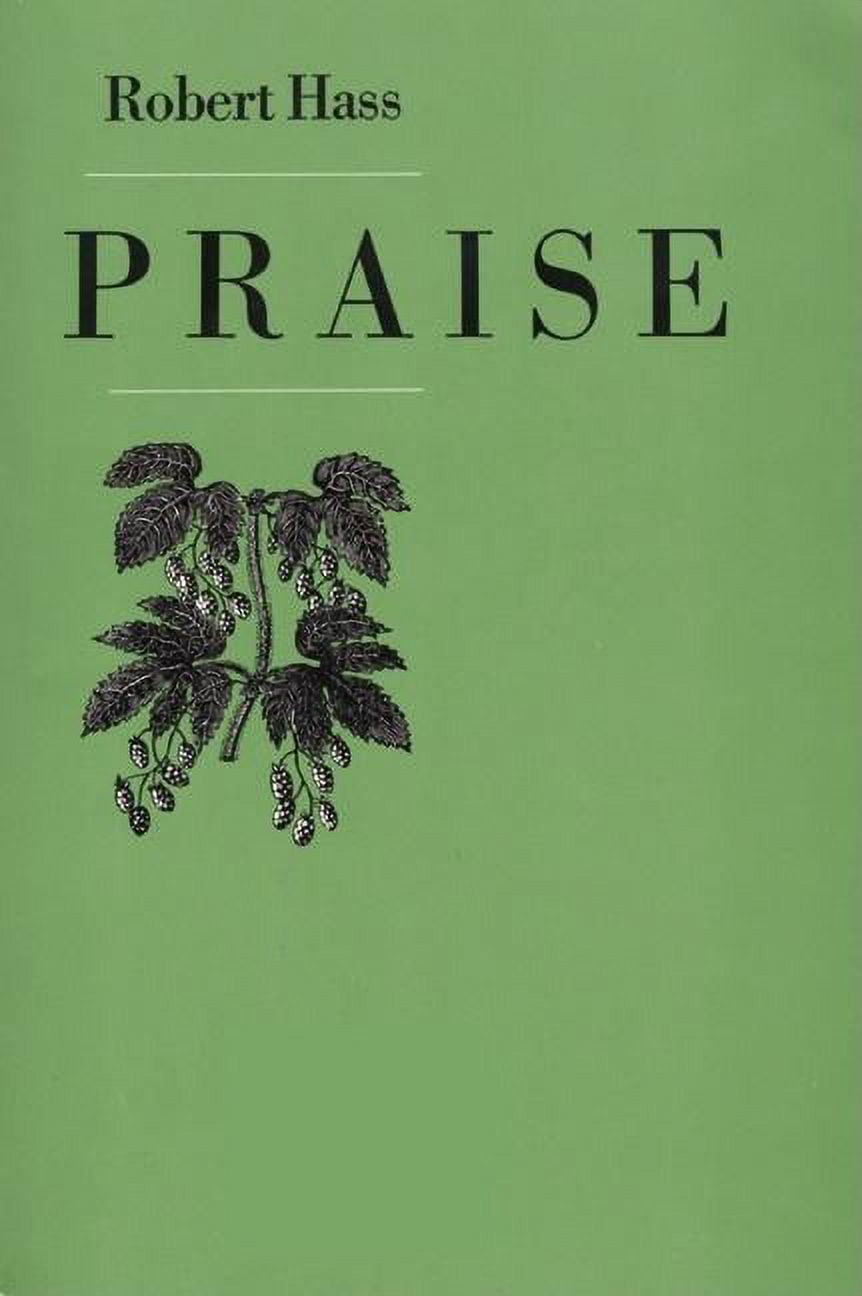
This is my favorite collection of poetry and “Meditation at Lagunitas” is the one that started it all for me.
Meditation at Lagunitas
All the new thinking is about loss.
In this it resembles all the old thinking.
The idea, for example, that each particular erases
the luminous clarity of a general idea. That the clown-
faced woodpecker probing the dead sculpted trunk
of that black birch is, by his presence,
some tragic falling off from a first world
of undivided light. Or the other notion that,
because there is in this world no one thing
to which the bramble of blackberry corresponds,
a word is elegy to what it signifies.
We talked about it late last night and in the voice
of my friend, there was a thin wire of grief, a tone
almost querulous. After a while I understood that,
talking this way, everything dissolves: justice,
pine, hair, woman, you and I. There was a woman
I made love to and I remembered how, holding
her small shoulders in my hands sometimes,
I felt a violent wonder at her presence
like a thirst for salt, for my childhood river
with its island willows, silly music from the pleasure boat,
muddy places where we caught the little orange-silver fish
called pumpkinseed. It hardly had to do with her.
Longing, we say, because desire is full
of endless distances. I must have been the same to her.
But I remember so much, the way her hands dismantled bread,
the thing her father said that hurt her, what
she dreamed. There are moments when the body is as numinous
as words, days that are the good flesh continuing.
Such tenderness, those afternoons and evenings,
saying blackberry, blackberry, blackberry.
☕Buy me a coffee☕
I’m grateful for any donations. Not required of course. I offer most of my writing for free. As always, thank you for reading!